
Troubleshooting
Troubleshooting Flue Gas Damper Actuator and Seal Failures
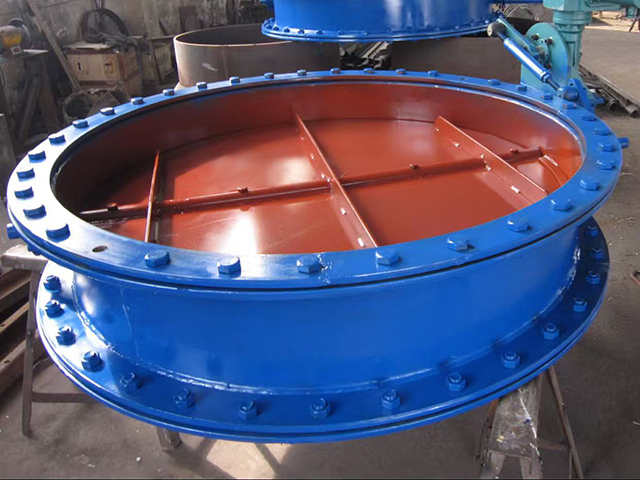
Nearly every flue gas damper fault you will meet in a coal-fired plant comes from one of three places: the duct moved and the blade did not, ash packed into the seat pocket, or the actuator was sized on a cold, clean blade that no longer exists. Diagnose the cause before you touch a setting. Re-torquing packing on a binding damper buys you a week and hides the real problem.
How the damper is built, and why that matters when it fails
A flue gas damper is a duct-mounted isolation device: a steel frame welded into the duct, one or more blades, a seating face, a shaft carried in bearings, gland packing, and an actuator. Single-blade guillotine designs dominate on large rectangular ducts because they give a straight-through bore when open. Louver and multi-blade designs are used where the duct is wide and the available stroke is short.
In coal-fired service most of these sit between the economizer outlet and the FGD inlet. Gas temperature there typically runs 130–180 °C downstream of the air preheater and 350–420 °C at the economizer outlet, with the hot-side bypass and hot duct dampers seeing more. Typical quoted leakage for a metal-seated isolation damper is around 1% of duct cross-section at a stated differential pressure; soft-seated designs claim lower, and both figures depend heavily on how well the seat is protected from ash. Ask what differential pressure the number applies to. A leakage figure without a pressure is marketing, not data.
Actuator failures: match the type to the failure you are seeing
Actuator faults tend to follow the drive type, and the drive type usually follows the blade mass and stroke requirement. Knowing which one you have shortens diagnosis considerably.
| Actuator type | Where it fits | Typical failure on site | First thing to check |
|---|---|---|---|
| Electric multi-turn with worm gearbox | Large isolation dampers, 30–90 s stroke | Torque switch trips on closing; limit cam drifts after thermal cycling | Breakaway torque against the set torque value, measured hot |
| Electro-hydraulic push-pull | Heavy guillotine blades needing high thrust | Oil weeping at the rod seal; pressure held against a mechanical stop | Pressure-versus-stroke curve, rod seal condition |
| Pneumatic cylinder | Fast-acting or modulating dampers on smaller ducts | Spring return no longer fully seats; water in the air line | Air dew point, spring free length, cylinder bore scoring |
| Manual handwheel or chain wheel | Maintenance isolation only | Spindle seized after years untouched | Lubrication history, spindle straightness |
The stall is almost never the motor
When an electric actuator trips on torque at 80% closed, the motor is doing its job. Something is resisting. Three causes cover most cases. The first is thermal binding: the frame and the blade are at different temperatures, or the duct expansion is taken up on one side only, and the blade clearance designed at 20 °C has gone to zero at 380 °C. The second is seat friction from ash compacted into the seat pocket and baked hard. The third is a torque setting copied from the cold commissioning stroke and never revisited.
Size for the hot, dirty breakaway condition, not the clean factory one. A reasonable design margin is 1.5 times the calculated hot breakaway torque, and on guillotine blades wider than about 2 m you should also account for blade deflection under 3–5 kPa of differential pressure. Deflection closes the clearance at mid-span. That is where the score marks will be.
The valve sticks. Here is why. Nobody measured it hot.
Sealing: four places leakage actually comes from
When an engineer reports that a damper will not isolate, the leakage is nearly always at one of these interfaces, and they are fixed in different ways.
- Blade-to-seat contact. Metal-to-metal seats rely on line contact and a clean face. Ash on the face holds the blade off by fractions of a millimetre, which is enough.
- Shaft gland. Packing that was correct cold will weep when the shaft grows and the gland follows the housing. Live-loaded packing or a purge connection solves most of it.
- Frame-to-duct flange. Expansion gaps open on the cold side of a hot duct. This looks like damper leakage but is a duct problem.
- Bypass around the closed blade. Blades that do not reach full travel, or that stop short because the limit switch was set on a cold stroke, leave a permanent gap at one edge.
What coal-fired service does to a seal
Three mechanisms dominate. Fly ash abrasion wears the seat contact line and the blade edges, slowly enough that nobody notices until the unit fails an isolation test. Acid condensation attacks the seat and shaft region when the duct drops below the acid dew point during shutdowns — this is the corrosion you find on the cold underside of a horizontal blade. Differential movement between blade and frame, repeated over hundreds of cycles, opens clearances that were designed tight.
On retrofits we have supplied, the single most useful change is a purge or air-sweep connection at the seat pocket. Keeping that pocket clear of ash does more for long-term tightness than upgrading the seat material. If your plant cycles the damper weekly, specify it from the start.
A specification checklist that prevents most callbacks
- State gas temperature range including upset and startup conditions, not just normal operating temperature.
- Give the differential pressure the leakage figure must be met at, and the acceptable leakage in m³/h or % of area.
- Confirm the required stroke time and whether the damper is isolation-only or modulating. Modulating duty changes the actuator and the bearing selection.
- Ask for the hot breakaway torque calculation, and check that your actuator has margin over it.
- Specify ash conditions: dust loading in g/Nm³, particle size, and whether the pocket needs a purge connection.
- Agree the seat type — metal-to-metal or soft — and what happens to the soft seal above its temperature limit.
- Confirm the fail-safe position on loss of power or air, and how the damper proves it.
- Ask for the flange drilling standard and expansion allowance at the duct interface.
For the wider range of isolation and control dampers used across a boiler island, compare the power plant dampers range before locking the datasheet, and check the industrial flue gas damper page for the high-temperature construction detail.
What to witness at the factory
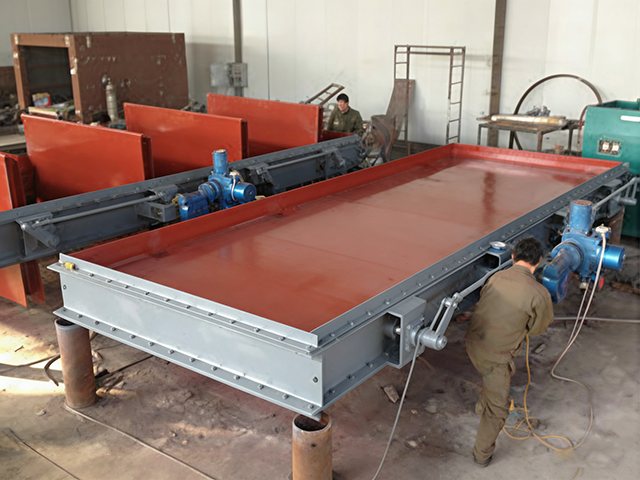
Ask for a full-stroke operation test with torque or thrust recorded at open, mid-travel and closed, and a leakage test with the differential pressure stated in the report. A dye-penetrant check on the seat contact line is worth requesting on dampers destined for FGD inlet duty. Confirm the packing is installed and the gland has adjustment travel remaining, because a gland with no travel left is a leak waiting for the first thermal cycle. Casing and drive guards should be dry-film primed before export packing; a damper that arrives with handling damage at the seat face will leak no matter how good the actuator is.
Maintenance intervals that hold up
- Every major outage: clean the seat pocket, inspect the contact line for scoring, record the gap.
- Every major outage: re-set limit switches hot, after the unit has been at operating temperature.
- Annually: check gland adjustment travel, top up or replace packing, verify the purge line is clear.
- Annually: record actuator torque or hydraulic pressure at breakaway and compare to the commissioning baseline.
- Two-yearly or after 500 cycles: inspect shaft bearings and lubricate the gearbox per the drive manufacturer's schedule.
Send the drawings before you send the purchase order
Most of the failures described here are decided at specification stage, months before anyone picks up a wrench. Send us the duct drawings, gas conditions, required leakage and stroke time, and we will review the seat, actuator and purge arrangement against your duty and reply with a technical proposal. Use the request a quote form, or start from the industry solutions pages if you are still scoping the system.
Key takeaways
- Most damper actuator stalls come from thermal binding, compacted ash in the seat pocket, or a torque setting never re-checked hot.
- Size actuators on hot, dirty breakaway torque with roughly 1.5x margin, and account for blade deflection on wide guillotine blades.
- Leakage has four distinct paths: blade-to-seat, shaft gland, duct flange and incomplete travel. Diagnose which one before adjusting anything.
- A purge connection at the seat pocket and hot limit-switch setting prevent more callbacks than upgrading seal material.
Frequently asked questions
How often should damper gland packing be replaced?
Inspect gland adjustment travel at every annual outage and replace packing when no travel remains. Shaft growth at 350–400 °C means packing that was correct cold will weep later, so live-loaded packing or a purge connection is worth specifying on hot ducts.
Need this equipment for your plant?
Send your duct layout or process data and our engineers will review the selection and return an itemized quotation.
Request a Quote