
Troubleshooting
Baffle Door Actuator and Seal Troubleshooting in CFB Boilers
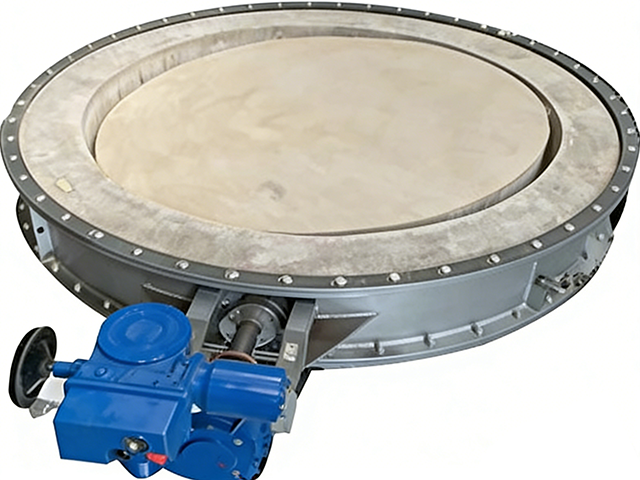
Diagnose the Actuator and the Seal Separately
A baffle door that will not close and a baffle door that closes but leaks are two different faults. One lives in the drive train. The other lives in the seat, the packing and the flange joints. Treating both as a single "damper problem" is how plants end up replacing a healthy actuator to cure a warped disc.
On a circulating fluidized bed boiler the split matters more than on a pulverized-coal unit. Bed material carryover, positive duct pressure and daily load ramping punish a baffle door in ways a conventional flue run never does.
What CFB Duty Actually Does to the Door
A high-temperature baffle door in CFB service typically runs somewhere between 350 °C and 750 °C continuous, with excursions higher during upsets. The gas is dirty. Dust loadings of 20–60 g/Nm³ upstream of the air preheater are normal, and the particles are abrasive: ash, bed sand, unburned carbon.
Now add cycling. A unit that ramps two or three times a day for renewable balancing imposes three stresses at once — thermal cycling of the body, abrasive wear on the seat faces, and differential expansion between disc, shaft and housing. Each one produces a different failure signature, and each one needs a different response.
When we review a failed unit, the first question is always the same: did it fail hot or cold? A door that strokes perfectly at ambient and stalls at 600 °C has a clearance problem, not a torque problem.
Actuator Faults: Torque, Binding, or Both
An actuator tripping on overload is telling you something specific. It is almost never the motor. Wind the torque limit up to clear the alarm and you will shear a shaft or bend a linkage within a few months — usually during a weekend, usually on the unit you cannot afford to lose.
Work backwards through the drive train: disc, shaft, bearing, linkage, gearbox, actuator. Most site findings fall into the patterns below.
| Symptom | First check | Likely root cause | Corrective action |
|---|---|---|---|
| Torque trip during closing | Stroke the disc with the actuator uncoupled | Disc distortion, seat debris, or a swollen seat weld | Clean the seat, check disc flatness, reset torque to the calculated value |
| Door drifts open under duct pressure | Holding torque vs. specified differential | Undersized actuator or worn worm gear | Recalculate torque at 1.25× maximum differential pressure and resize |
| Jerky or slow travel | Bearing temperature and grease condition | Lubricant broken down above roughly 200 °C at the bearing | Move to a high-temperature synthetic grease; add a cooling collar if needed |
| Position feedback disagreeing with the disc | Coupling and key between actuator and shaft | Coupling slip or a sheared key | Re-key, re-torque, recalibrate limit switches |
| Actuator runs, disc does not move | Linkage and shaft rotation | Seized shaft from galling or thermal bow | Free the shaft, replace the bushing with correct hot clearance |
Shaft Binding and Thermal Growth
The single most common complaint on hot ducts is a door that binds only at temperature. Clearances set cold are not clearances set hot. A 1.2 m disc on a stainless shaft can grow several millimetres axially between ambient and 700 °C, and the shaft centreline lifts as the body bows under the temperature gradient.
Separating growth from galling
- Measure shaft rotation torque cold, then repeat at operating temperature with a strap wrench on the exposed shaft end.
- Look for a bright, torn surface on the journal. That is galling, not growth.
- Check whether the bearing housing was shimmed for the cold position only. A slotted or floating bearing end often solves a growth bind outright.
- Confirm the packing is not over-tightened. A gland compressed to stop a drip can add more friction than a misaligned bearing.
Galling is a different animal. An austenitic shaft running directly in a carbon steel bore will pick up within a few hundred cycles, no matter how much you grease it. The repair is a replaceable bushing, a nitrided or hard-faced journal, and a stated hot clearance — not more lubricant.
Where the Leakage Actually Comes From
There are three paths, and most inspections test only the first.
- Seat to disc. The intended sealing line. Leakage here points to distortion, thermal warping or debris trapped between the faces.
- Shaft penetration. Packing that has dried out at temperature, or a gland tightened once during commissioning and never revisited.
- Body and flange joints. Gaskets chosen for the original design temperature that no longer match after a duct modification or an FGD retrofit.
Isolate before you speculate. With the upstream fan stopped and the duct purged, a smoke test or a low-pressure air test at the flange faces will usually identify the path inside an hour. That hour saves a week of guessing.
Matching Seat Design to the Duty
Leakage rate is a specification, not an aspiration. Ask for the number and the test method behind it, on a cold test, at a stated differential. The figures below are typical market values, not certified performance for any specific unit.
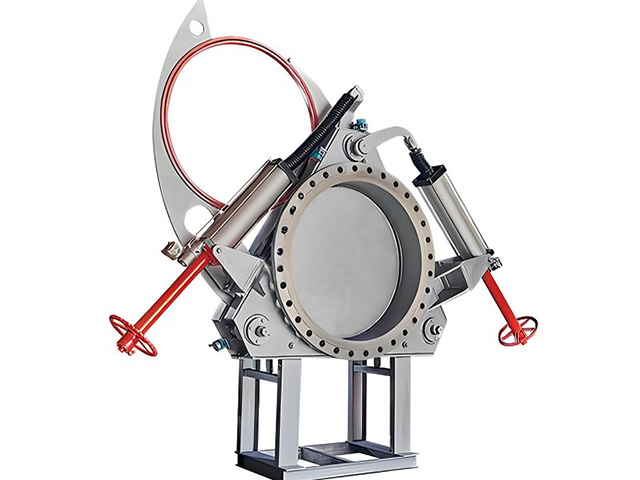
| Seat arrangement | Typical cold leakage (indicative) | Temperature fit | Where it suits |
|---|---|---|---|
| Single eccentric metal seat | Around 1% of duct flow at 1 kPa | to roughly 500 °C | Isolation where a small leak is tolerable |
| Double eccentric metal seat | 0.5–1% at 1 kPa | to roughly 700 °C | Common CFB flue gas isolation duty |
| Flexible graphite or hard-faced metal seat | 0.1–0.5% class on a nitrogen test | to roughly 800 °C | Tight shut-off upstream of FGD or an air preheater |
| Inflatable soft seal | Near zero when pressurised | Below about 200 °C | Cold-end ducts only — not the hot CFB flue path |
Test methods matter as much as the number. Leakage classes under EN 12266-1 or a nitrogen test to an agreed procedure give you something to compare across bidders. "Bubble tight" in a quotation is not a specification.
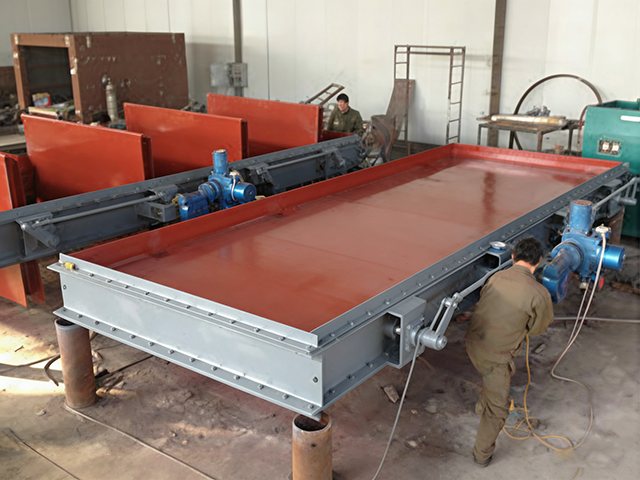
Choosing the Actuator for a CFB Duct
Torque is calculated, not estimated from the old unit. Take the maximum differential pressure the duct can see during a fan trip, multiply by the disc area and the seat friction coefficient, then add a margin of at least 25%. Anything less and the door will stall exactly when you need it.
- Electric multi-turn: straightforward position feedback, good for large discs and slow strokes. Specify the ambient rating and heater; a cold-climate installation will condensate inside the terminal box.
- Pneumatic with spring return: preferred where a fail-safe position is mandatory. Check air quality — wet instrument air destroys cylinders faster than heat does.
- Electro-hydraulic: high torque in a small envelope, and useful where a controlled closing profile reduces seat impact on a large disc. Higher maintenance competence required on site.
Pre-Selection Checklist
- Duct size, and whether the door is round or rectangular with a centre divider.
- Design and maximum temperature, including upset excursions and duration.
- Maximum differential pressure in both directions, plus the fan-trip case.
- Required leakage class and the test method you will witness.
- Dust loading and particle size, so seat materials and purging can be specified.
- Actuator type, fail-safe position, and available power or air supply.
- Stroke time, and whether modulating control is genuinely needed or simply isolation.
- Duct movement and expansion joint location — a rigid door bolted across a moving joint will crack its own frame.
Full technical data for the high-temperature baffle door covers the standard configurations; the wider range sits under power plant dampers.
What Drives the Price
Four items account for most of the spread between quotations. Seat material and machining tolerance come first — a hard-faced, ground seat costs more than a flame-cut one and lasts several times longer in abrasive CFB gas. Second is the body construction: stiffener layout and plate thickness determine whether the door stays flat through a thermal cycle. Third is the actuator and its torque margin. Fourth is testing: a witnessed leakage test and a full stroke test at temperature cost money and remove most of the commissioning risk.
Cheap doors are usually cheap in the seat and the shaft bearing. Those are exactly the two places where a CFB unit will find the weakness first.
What Goes Wrong in Service
Seat wear is progressive and rarely sudden. A door that leaked 0.5% at commissioning and leaks 3% after three years has an erosion problem, and the answer is a harder seat face or a purge, not a new actuator. Packing is the opposite: it fails quietly and then all at once, usually as a visible plume at the gland during a cold start.
Build two checks into your outage plan. Stroke the door to both limits with the actuator uncoupled and record the torque. Then inspect the seat faces and the shaft journal before cleaning, not after — the wear pattern tells you which way the disc is distorting.
For plants running multiple duct isolation points, the same logic applies across the industry solutions we supply into CFB, biomass and metallurgical service.
Send the Duct Data and Let Us Review It
If you are replacing a door that has already failed twice, the useful starting point is not a catalogue page — it is the duct drawing, the temperature and pressure envelope, and the leakage class you actually need. Send those to our engineering team and we will check the torque margin and seat selection against the duty before anything is quoted. You can request a technical review with your drawings and specifications attached.
Key takeaways
- Diagnose actuator stalls and seat leakage as separate faults; a warped disc is not an actuator problem.
- Clearances set cold are not clearances hot — check for thermal growth and shaft galling before touching torque limits.
- Specify leakage as a number plus a test method (EN 12266-1 or an agreed nitrogen test), never as "bubble tight".
- Size actuator torque on the fan-trip differential pressure with at least 25% margin.
Frequently asked questions
Why does my baffle door stroke freely when cold but stall at operating temperature?
Almost always a clearance issue rather than an actuator fault. The shaft grows axially and the body bows as it heats, closing up bearing clearances set at ambient. Check the journal for galling and confirm whether the bearing housing allows for thermal movement before adjusting the actuator.
How much leakage is normal for a high-temperature baffle door in CFB service?
Typical double eccentric metal seats sit around 0.5–1% of duct flow on a cold test at 1 kPa, while hard-faced or flexible graphite seats can reach the 0.1–0.5% class. Treat these as indicative and specify the leakage class together with the test method you will witness.
Should I use a soft inflatable seal for tight shut-off?
Not on the hot flue path. Elastomer seals are generally limited to below about 200 °C, so they suit cold-end ducts and FGD inlet locations. For CFB flue gas at 350–750 °C you need a metal seat with the appropriate facing.
Need this equipment for your plant?
Send your duct layout or process data and our engineers will review the selection and return an itemized quotation.
Request a Quote