
Technical Guide
Steam Vent Silencer Installation Best Practices
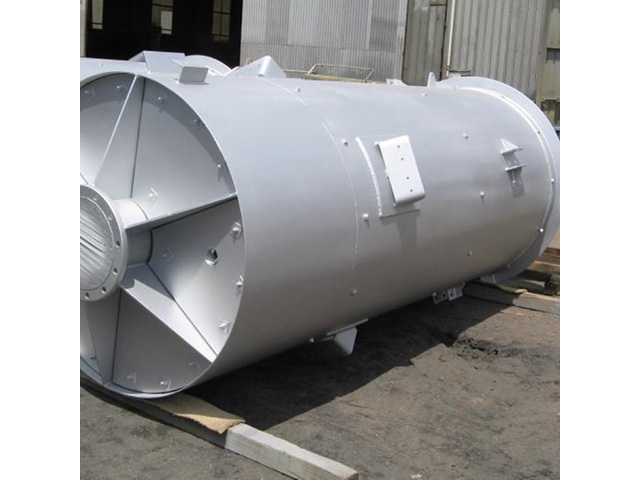
A steam vent silencer fails at the flange far more often than inside the acoustic element. On the steam and district heating retrofits we have supplied, the problems that actually matter come from support, drainage and back pressure — three things decided on site, not in the acoustic design. Get those right and the silencer quietly does its job for fifteen years.
How a vent silencer actually cuts the noise
Venting saturated steam to atmosphere converts pressure energy into a jet, and the jet is what you hear. A silencer handles it in two stages. First, a drilled diffuser breaks one large jet into hundreds of small ones, which shifts the noise upward in frequency and reduces the peak. Second, an absorptive cartridge — perforated plate backed by mineral wool or stainless mesh — soaks up the remaining broadband noise. Reactive expansion chambers are often added where a safety valve lift produces strong low-frequency content that absorptive packing alone will not touch.
Both stages cost pressure. Every silencer is a restriction in your vent line, and that restriction pushes back on the safety valve or vent valve upstream.
Confirm the back pressure before you confirm anything else
For a conventional safety valve, the total back pressure in the discharge line — silencer included — usually has to stay under roughly 10 percent of set pressure, and your valve supplier owns that number. On packaged steam vents, a silencer sized on flow alone can eat most of that allowance. Check it at the enquiry stage, because the fix is a larger silencer body, not extra effort during the shutdown.
Give the silencer supplier flowing conditions, not the boiler nameplate. What we need on a vent line is:
- Mass flow at relief conditions in kg/h, taken from the valve sizing sheet
- Set pressure, plus the steam temperature at the silencer inlet — superheated steam changes both density and jet velocity
- The permitted back pressure stated by the valve manufacturer, in bar or as a percentage of set pressure
- Noise limit and the point where it applies: 1 m from the outlet, or the plant boundary at night
- Duty cycle, because a safety valve that lifts twice a year and a continuous blowdown vent running 24/7 need different hardware
- Condensate behaviour — wet steam, carryover, and whether the line is drained ahead of the silencer
Matching the silencer type to the duty
Four families cover most steam and district heating vents. The attenuation figures below are typical ranges, not guaranteed values for your case.
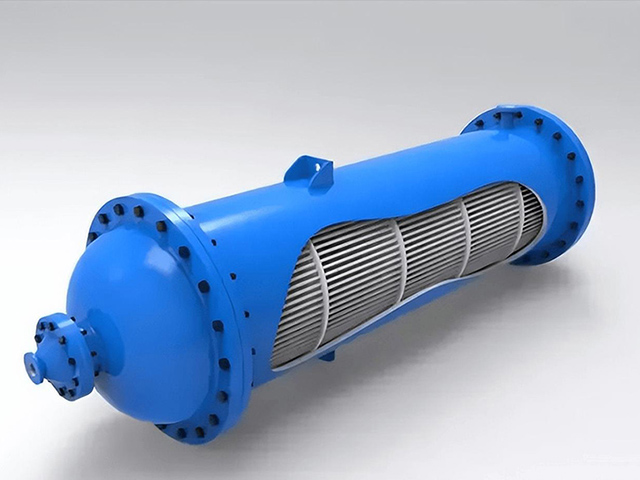
| Type | Typical attenuation | Back pressure | Wet steam tolerance | Typical duty |
|---|---|---|---|---|
| Reactive expansion chamber | 15–25 dB(A), strongest at low frequency | Moderate, rises off design | Good | Safety valve vents with a low-frequency pop |
| Absorptive cartridge | 25–35 dB(A), mid to high frequency | Low | Poor unless protected | Continuous vents with dry or superheated steam |
| Combination reactive plus absorptive | 30–40 dB(A) broad band | Moderate | Fair, needs a drain | High pressure steam vents near a boundary |
| Drilled diffuser or multi-hole | 20–30 dB(A) | Designed in, predictable | Good | Small flows, vent headers, blowdown |
District heating networks lean toward combination units. Steam mains in dense urban plant rooms vent close to housing, and the dominant complaint frequency is usually 125–500 Hz, where an absorptive cartridge on its own is weakest.
Orientation, support and thermal growth
Point the outlet up. A vertical discharge sends the noise upward and away from the operating floor, and it lets condensate fall back to the drain instead of pooling in the cartridge. Horizontal discharge against a wall or into a corner can add 3–6 dB(A) at the nearest receptor through reflection alone.
Support the silencer from the structure, never from the valve. A 3 m carbon steel silencer at 350 °C grows about 12 mm along its length; restrained rigidly against the valve nozzle, that movement ends up as load on the valve body and distortion of the seat. Use a guided sliding support with the guide near the inlet, and leave the outlet end free to move.
Three more details that come up on nearly every retrofit:
- Keep a straight length of at least three pipe diameters upstream of the inlet so the flow arrives without swirl.
- Leave maintenance access to the cartridge; a silencer boxed in by insulation and scaffolding will not be inspected.
- Do not insulate over the drain connection or the nameplate, and mark the lifting points before the unit leaves the ground.
Draining and freeze protection
Condensate is the slow killer. A drain at the lowest point, sized one or two pipe sizes below the vent line and sloped at about 1:50 toward the outlet, keeps the packing dry between lifts. Fit a trap or a locked-open manual valve on continuous service, and a short free drain on intermittent service where freezing is possible.
In district heating plant rooms that see frost, trace the drain and the lower body. A frozen drain turns the next valve lift into a water hammer event against the cartridge, and the perforated plate rarely survives it.
Standards and the data worth asking for
ISO 14163 sets out the general approach to silencer selection, and ISO 7235 — borrowed from ducted ventilation practice — is the usual test method for insertion loss and flow noise. For pressure-retaining parts, ask which design code applies, such as ASME Section VIII or PED, and ask for the welding qualification behind the shell seams.
A serious quotation includes predicted sound pressure level at 1 m and at the boundary, octave band data from 63 Hz to 8 kHz, pressure drop at the specified flow, materials of construction with grades, and the surface finish inside the cartridge. If a supplier can only give a single dB(A) number, that number is a guess.
What goes wrong in service
Failures cluster in the same places across plants. Watch for these:
- Cracking at the inlet diffuser welds after repeated thermal cycling — usually a weld detail problem, not a thickness problem
- Erosion of the first perforated stage where inlet velocity stays above roughly 30 m/s for long periods
- Waterlogged absorptive packing, which shows up as lost attenuation before it shows up as corrosion
- Chloride stress corrosion on 304 stainless outlet components in coastal or chemical plant atmospheres
- Valve seat leakage traced back to a silencer welded rigidly to the valve body
- A blocked drain found only after the water hammer, never before
Pre-startup checks
- Confirm the nameplate flow, pressure and material match the datasheet and the relief valve sizing sheet.
- Verify the drain is clear, sloped and open to a safe location.
- Check the sliding support moves freely with the guide engaged, and that nothing ties the silencer to the valve nozzle.
- Measure the distance to the nearest occupied area and compare it with the predicted level in the quotation.
- Record a baseline sound measurement at 1 m and at the boundary during the first lift, then compare after the first year.
What drives the price
Acoustic length and shell diameter set most of the cost, then material grade, pressure rating and diffuser complexity. Certification and third-party witness testing add to both price and lead time, and one-off customs always cost more per unit than a repeat size. As an industry reference, a carbon steel absorptive silencer and a 316L combination unit of the same bore often differ by a factor of two or more in quoted price. Typical custom fabrication lead times in this category run four to eight weeks.
If you are weighing options across the wider vent and duct package, the industrial venting silencer page lists the standard configurations, and the noise control equipment range covers the rest of the plant. Isolation hardware upstream of a vent header is covered under power plant dampers, and system-level layouts sit under our industry solutions.
Send us the vent line drawings, valve sizing sheet and the noise limit you have to meet. Our engineers will check back pressure, support arrangement and attenuation against your duty and come back with a technical review before any commercial discussion.
Key takeaways
- Back pressure in the discharge line, not acoustic performance, decides whether a vent silencer can be used at all on a safety valve line.
- Support the silencer from the structure with a guided sliding support; thermal growth of several millimetres must not load the valve nozzle.
- A sloped drain at the lowest point protects the absorptive packing and prevents water hammer on the next valve lift.
- Ask for octave band data, design code and welding qualification — a single dB(A) figure is not a specification.
Frequently asked questions
How much back pressure does a steam vent silencer add?
It depends on the internal design and the flow, but a silencer sized properly will normally stay within the discharge line allowance set by the safety valve manufacturer, often about 10 percent of set pressure for conventional valves. Always confirm the figure at the enquiry stage rather than after installation.
Should the silencer be insulated?
Insulate the shell where surface temperature is a burn risk or heat loss matters, but leave the drain connection, nameplate and lifting points accessible. On intermittent vents, insulation can slow cooling and keep condensate in the cartridge longer, so check the drain design first.
How often should a vent silencer be inspected?
A visual and drain check annually, with the cartridge inspected every three to five years, or sooner on wet steam service. Any change in noise level at the boundary is a good trigger for an internal inspection.
Need this equipment for your plant?
Send your duct layout or process data and our engineers will review the selection and return an itemized quotation.
Request a Quote