
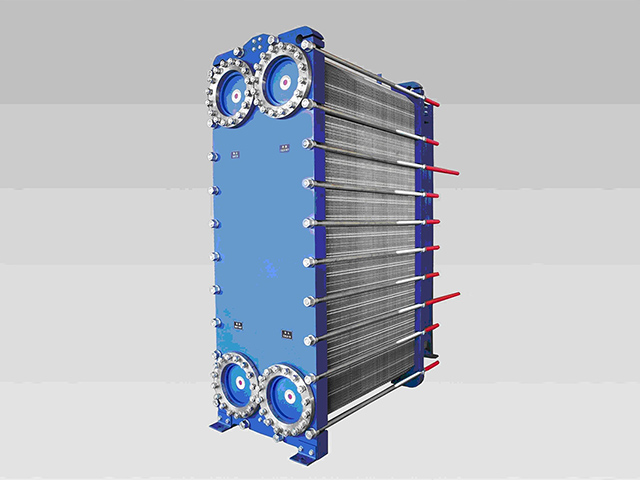
Plate Heat Exchanger
Plate heat exchanger is composed of a series of corrugated metal sheets combined by precision gaskets or…
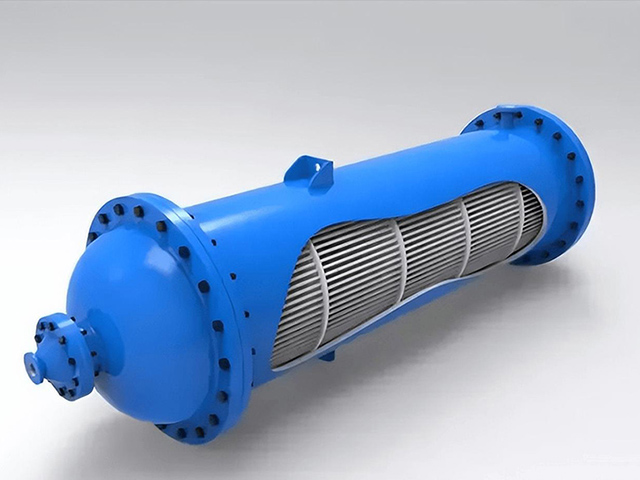
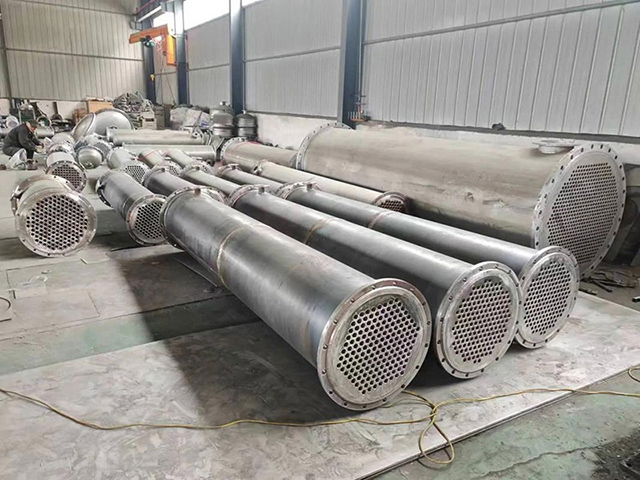
As the most widely used inter wall heat exchange equipment, the tube heat exchanger achieves heat exchange between two media through the clever combination of tube bundles and shells.
As the most widely used inter wall heat exchange equipment, the tube heat exchanger achieves heat exchange between two media through the clever combination of tube bundles and shells. Its core working principle is based on the synergistic effect of heat conduction and convective heat transfer: when a high-temperature fluid flows in the tube or shell side, heat is transferred to the low-temperature fluid on the other side through the tube wall, which is the most classic design in heat exchange equipment.

Component Name | Features | Innovative Design Trends |
Restrain | The core heat transfer component commonly uses φ19-25mm tubes | Enhanced heat transfer tube types such as corrugated tubes and finned tubes |
Tube sheet | Key components that fix the tube bundle and separate the tube side/shell side | New technology for integral forging and explosive composite panels |
Housing | Endure pressure and provide flow space | Compact design |
Baffle | Change the shell side flow channel to increase turbulence level | New structures such as spiral baffles and mesh grilles |
Pipe box | Allocate pipeline fluid for easy maintenance | Modular Quick Open Design |
Fault phenomenon | Possible reasons | Solution |
Decreased heat exchange efficiency | Scaling/blockage | Chemical cleaning or mechanical piping |
Pipeline leakage | Pipe mouth corrosion/vibration wear | Blockage or replacement of tube bundle (<10% of tubes can be blocked) |
Abnormal vibration | High flow rate/baffle failure | Adjust flow/replace baffle |
Seal leakage | Aging of gaskets/insufficient pre tightening force of bolts | Replace the sealing component |
As the heart equipment of process industry, tube heat exchangers are continuously evolving towards high efficiency, intelligence, and green direction. With the advancement of the "dual carbon" strategy, the new generation of products will achieve breakthroughs in energy efficiency improvement, lifespan extension, and convenient maintenance through the deep integration of material innovation and digital technology. It is recommended that users consider the characteristics of the medium, operating parameters, and full lifecycle costs when selecting, and prioritize the selection of new tube heat exchangers with enhanced heat transfer structures and intelligent monitoring functions to achieve the best technical and economic benefits.
Plate heat exchanger is composed of a series of corrugated metal sheets combined by precision gaskets or…
FAQ
We manufacture power plant dampers (flue gas, desulfurization, high-temperature baffle doors), slide gate valves, blind flange valves, rotary film and sponge iron deaerators, venting silencers, automatic dosing devices, steam-water sampling devices and sampling coolers, coal powder samplers, condensate recovery units, coarse and fine powder separators, and plate / shell-and-tube heat exchangers.
We are certified to ISO 9001:2015 (quality), ISO 14001:2015 (environmental) and ISO 45001:2018 (occupational health and safety) management systems. We are also a qualified supplier of Sinopec, PetroChina, China Guodian Corporation, China Datang Corporation, CNOOC and Aluminum Corporation of China Limited.
Yes — most of our business is retrofit supply. Send us the duct cross-section, design temperature and media, or drawings, templates and photos of the existing installation. Our engineers will dimension the unit, its flange drilling and the actuator interface to bolt directly into your plant.
Louver-type double-layer dampers with sealing air achieve a leakage rate below 0.5%; fully sealed slide gates and coal mill isolation doors achieve zero internal and external leakage. Every damper is leakage-tested in the works before shipment and a factory acceptance test report is supplied.
Send duct data or drawings today — get an engineering review, itemized quotation and realistic lead time within 12 working hours.