
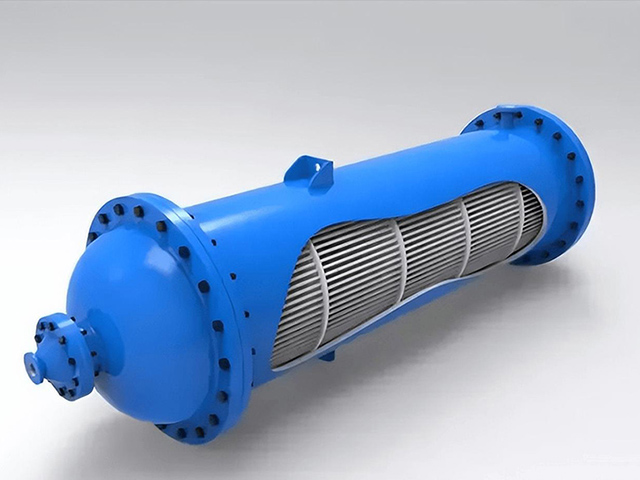
Shell-and-Tube Heat Exchanger
As the most widely used inter wall heat exchange equipment, the tube heat exchanger achieves heat exchange…
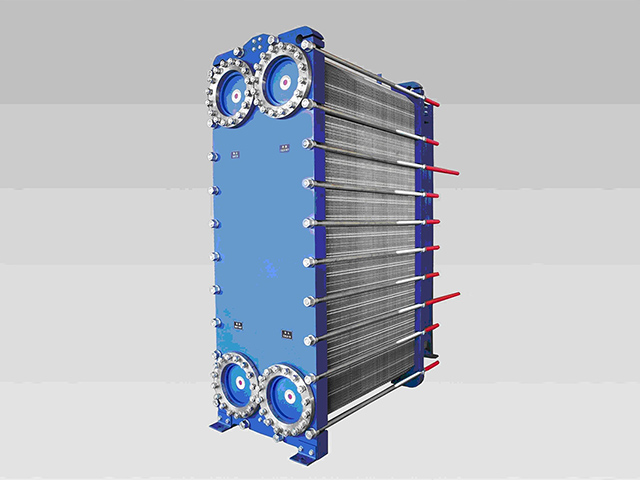
Plate heat exchanger is composed of a series of corrugated metal sheets combined by precision gaskets or laser welding.
Plate heat exchanger is composed of a series of corrugated metal sheets combined by precision gaskets or laser welding. These specially designed plates form a cross channel network, allowing cold and hot fluids to flow in opposite directions in adjacent channels, achieving efficient heat transfer through plate spacing of only 0.5-3mm. The typical heat transfer coefficient can reach 3000-7000W/(m ² · K), which is 3-5 times that of traditional tubular heat exchangers. This structure allows the device to have a volume of only 1/5-1/10 of that of a tubular type under the same heat transfer capacity, reducing weight by more than 60%. It has the characteristics of high heat transfer efficiency, low heat loss, compact and lightweight structure, small footprint, wide application, and long service life.

Component Name | Features | Technology evolution |
Heat transfer plate | Pressed corrugated board | Nano coating surface treatment technology |
Sealed system | Elastic gasket or laser welding | Design of adhesive free snap on gasket |
Frame structure | Fixed compression plate+movable compression plate+guide rod | Hydraulic quick release device |
Interface configuration | Flange/threaded connection | Sanitary Tri Clamp interface |
Support system | Heavy duty guide rail+roller | Fully automatic centering system |
Performance parameter range
Design pressure: gasket type ≤ 2.5MPa, fully welded type ≤ 4.0MPa, brazed type ≤ 3.0MPa
Temperature limit: -160 ℃ (cryogenic) to 550 ℃ (high-temperature brazed type)
Single unit area: 0.1-2200m ² (module combination can reach 10000m ²)
Flow range: 0.5-5000m ³/h (multi process configuration)
Temperature difference efficiency: up to 95% (calculated by NTU method)
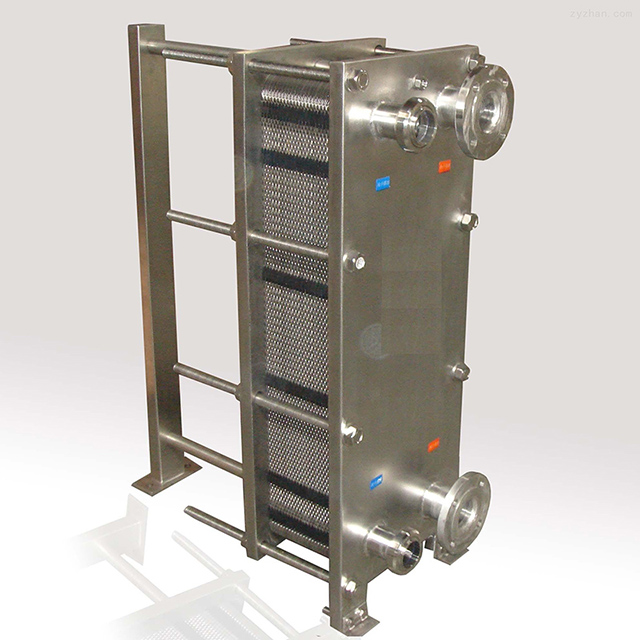
Evaluation dimension | Technical performance | Comparative advantage |
Heat transfer efficiency | Significant turbulence effect (Re>10 indicates turbulence) | Save over 70% of heat exchange area |
Compactness | The volumetric heat transfer coefficient reaches 250-1000m ²/m ³ | Reduce installation space requirements by 80% |
Scalability | Flexibly adjust capacity by adding or removing plates | Adapt to load fluctuations |
Convenient maintenance | Quick disassembly and cleaning (single maintenance<4 hours) | 90% reduction in shutdown losses |
Heat loss | Small external surface area (about 1/10 of tubular type) | 50% savings in insulation costs |
Application restriction analysis
1. Pressure limit: Conventional models are not suitable for ultra-high pressure systems (>6.4MPa)
2. Viscosity threshold: The viscosity of the medium at economic flow rate should be less than 500mPa · s
3. Particle content: Suspended solids concentration is recommended to be less than 5% (otherwise special wide channel design is required)
4. Temperature shock: When Δ T>50 ℃/min, a special plate structure is required
5. Initial investment: The cost of titanium equipment can reach three times that of carbon steel tube type
4、 Mainstream Types and Selection Guidelines
1. Detachable plate heat exchanger
Structural features: Rubber gasket sealing, bolt compression
Outstanding advantages: easy to clean and maintain, replaceable plates
Applicable scenarios: food, pharmaceutical and other hygiene level requirements
2. Fully welded plate heat exchanger
Innovative design: laser welding sealing, no gasket structure
Technical parameters: pressure resistance of 4.0MPa, temperature resistance of 450 ℃
Typical application: Chemical process heating/cooling system
3. Brazed plate heat exchanger
Manufacturing process: Copper/nickel brazing material vacuum brazing
Core advantage: Compact and lightweight (weight<50% of the same capacity detachable)
Usage restrictions: Non removable, suitable for cleaning media
4. Semi welded plate heat exchanger
Mixing characteristics: one side welded, one side sealed with a gasket
Special Value: Handling high-pressure/corrosive combination working conditions
Case: Refrigerant water heat exchange (evaporator/condenser)
As the most widely used inter wall heat exchange equipment, the tube heat exchanger achieves heat exchange…
FAQ
We manufacture power plant dampers (flue gas, desulfurization, high-temperature baffle doors), slide gate valves, blind flange valves, rotary film and sponge iron deaerators, venting silencers, automatic dosing devices, steam-water sampling devices and sampling coolers, coal powder samplers, condensate recovery units, coarse and fine powder separators, and plate / shell-and-tube heat exchangers.
We are certified to ISO 9001:2015 (quality), ISO 14001:2015 (environmental) and ISO 45001:2018 (occupational health and safety) management systems. We are also a qualified supplier of Sinopec, PetroChina, China Guodian Corporation, China Datang Corporation, CNOOC and Aluminum Corporation of China Limited.
Yes — most of our business is retrofit supply. Send us the duct cross-section, design temperature and media, or drawings, templates and photos of the existing installation. Our engineers will dimension the unit, its flange drilling and the actuator interface to bolt directly into your plant.
Louver-type double-layer dampers with sealing air achieve a leakage rate below 0.5%; fully sealed slide gates and coal mill isolation doors achieve zero internal and external leakage. Every damper is leakage-tested in the works before shipment and a factory acceptance test report is supplied.
Send duct data or drawings today — get an engineering review, itemized quotation and realistic lead time within 12 working hours.