
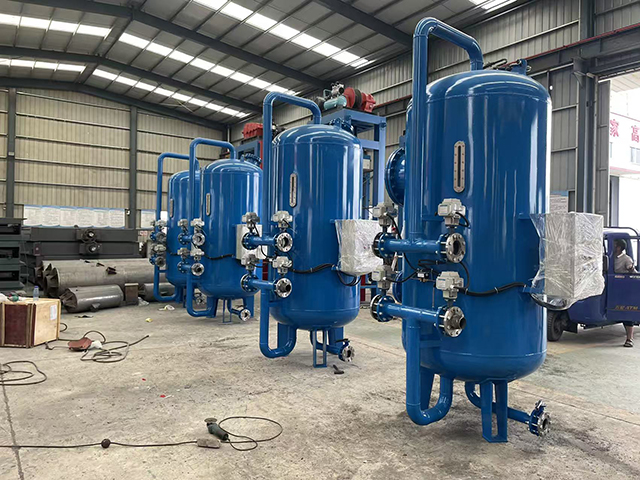
Oxygen Removal (Deaerator) Equipment
Sponge Iron Deaerator
Sponge iron deaerator is a water treatment device based on the principle of oxidation-reduction reactions.
- ISO 9001:2015
- NDA on request
- 1 pc MOQ
- DDP available
About this part

Sponge iron deaerator
A Sponge Iron Deaerator is a water treatment device based on the principle of oxidation-reduction reactions. It uses sponge iron with a special porous structure as the deoxygenation medium to efficiently remove dissolved oxygen from water. It is widely used for deaeration treatment in boiler feedwater, industrial circulating water, heating systems, and other industrial water applications.
Working Principle and Reaction Mechanism
The Sponge Iron Deaerator removes dissolved oxygen through oxidation-reduction chemical reactions. The core reaction process includes the following stages:
Electron Transfer Reaction:
Fe⁰ + O₂ → Fe²⁺ + O²⁻
Secondary Oxidation Reaction:
4Fe²⁺ + O₂ + 2H₂O → 4Fe³⁺ + 4OH⁻
Precipitate Formation:
Fe³⁺ + 3OH⁻ → Fe(OH)₃↓
Sponge iron (Fe⁰) acts as a reducing agent. Its porous structure provides a large specific surface area, typically reaching 50–100 m²/g, allowing dissolved oxygen (O₂) to fully contact the iron surface and accelerating the oxidation reaction.
The resulting Fe(OH)₃ precipitate can be removed by the downstream filtration system, while the dissolved oxygen content in the treated water can be reduced to below 0.05 mg/L.
System Structure and Equipment Components
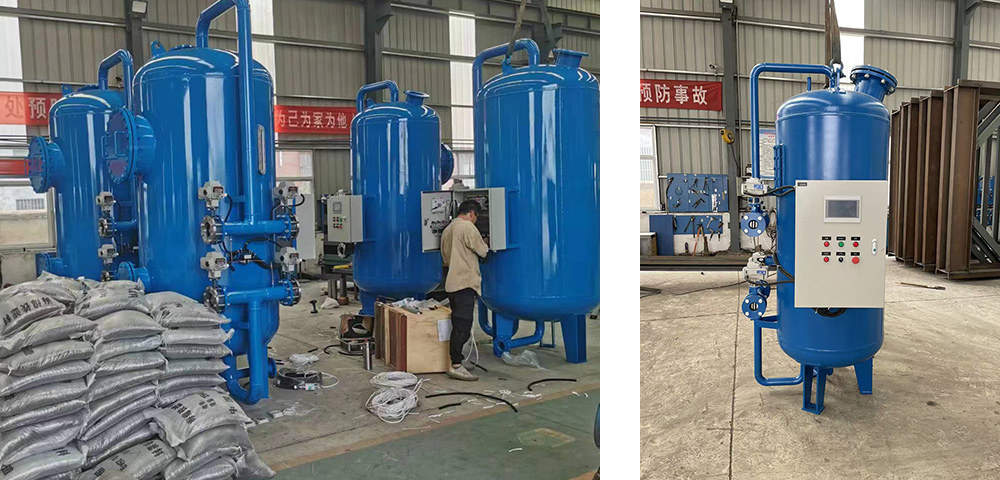
A typical Sponge Iron Deaeration System consists of the following key components:
Main Reactor: A steel vessel filled with a sponge iron filter media layer, with a typical design flow rate of 8–15 m³/h.
Pretreatment Unit: Includes mechanical filters, activated carbon filters, and other equipment for removing suspended solids and organic matter.
Post-Treatment Unit: A precision filter with a filtration accuracy of 5–10 μm for removing reaction products.
Regeneration System: A backwashing system designed to periodically restore the activity of the filter media.
Control System: Consists of flow meters, dissolved oxygen monitoring instruments, and automatic valves for system regulation and control.
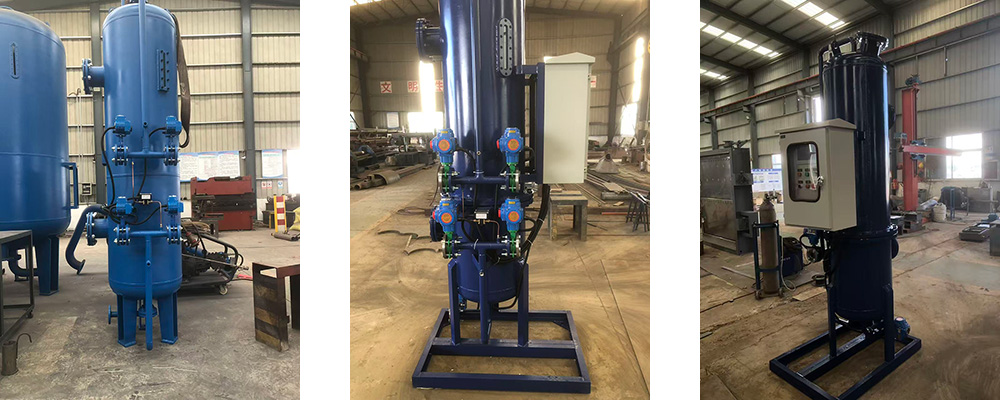
According to treatment capacity, Sponge Iron Deaerators can generally be divided into the following categories:
Small Integrated Equipment
Treatment capacity: Less than 10 m³/h
These systems feature a compact design and are suitable for small-scale water treatment applications.
Medium Modular Systems
Treatment capacity: 10–50 m³/h
Multiple vessels can be installed in parallel to provide flexible treatment capacity and operational reliability.
Large Industrial Systems
Treatment capacity: More than 50 m³/h
These systems are typically highly automated and designed for large-scale industrial water treatment applications.
Technical Advantages and Performance Features
Sponge iron deaeration technology offers several significant advantages:
High Deoxygenation Efficiency
The reaction rate is fast, and dissolved oxygen can be reduced to below 0.05 mg/L under normal temperature conditions.
Economical Operation
No heating is required. Energy consumption is typically only one-fifth to one-tenth of that required by thermal deaeration systems.
Easy Operation
The system can achieve a high degree of automation and requires relatively little routine maintenance.
Safe and Reliable
The process does not involve an explosion risk and does not generate harmful by-products under normal operating conditions.
Dual Treatment Effect
In addition to dissolved oxygen removal, the system can also remove certain heavy metal ions and colloidal substances.
Strong Adaptability
The system has good tolerance to fluctuations in water temperature and pH value and can generally operate within a pH range of 6–9.
Key Operating Parameters
To ensure stable and efficient operation, the following parameters should be carefully controlled:
| Parameter | Control Range | Monitoring Frequency |
|---|---|---|
| Influent Dissolved Oxygen | ≤ 8 mg/L | Continuous monitoring |
| Operating Pressure | 0.2–0.6 MPa | Every 2 hours |
| Filtration Rate | 8–15 m/h | Every shift |
| Pressure Differential | < 0.15 MPa | Real-time monitoring |
| Effluent Dissolved Oxygen | ≤ 0.05 mg/L | Continuous monitoring |
| Backwashing Cycle | 24–72 hours | Controlled according to pressure differential |
Application Areas and Typical Uses
Sponge iron deaeration technology has been successfully applied in many industrial fields.
Power Industry
It is widely used for deaeration treatment of feedwater for small and medium-sized boilers, helping reduce operating costs and minimize oxygen corrosion in boiler and pipeline systems.
Petrochemical Industry
It can be used for dissolved oxygen removal from circulating cooling water systems, helping reduce corrosion and extend the service life of equipment and pipelines.
Pharmaceutical Industry
Sponge iron deaeration systems can be integrated into purified water preparation systems where stable water quality control is required.
Food and Beverage Industry
The technology can be used for process water treatment to help maintain stable water quality and support consistent product quality.
District Heating Systems
It is suitable for oxygen corrosion protection in hot water pipeline networks, helping reduce corrosion-related maintenance requirements and improve system reliability.
Maintenance Management and Filter Media Regeneration
Scientific maintenance management is essential for ensuring the long-term stable operation of a Sponge Iron Deaerator.
Daily Monitoring
Operators should regularly record changes in key parameters, including influent and effluent dissolved oxygen levels, pressure differential, flow rate, and operating pressure.
Regular Backwashing
Air-water combined backwashing can be used to remove accumulated suspended solids and reaction products from the filter media. A typical backwashing intensity is 8–12 L/(s·m²).
Chemical Regeneration
Depending on water quality and operating conditions, chemical regeneration may be performed every 6–12 months. A 5–10% hydrochloric acid solution may be used under appropriate controlled conditions to help restore filter media activity.
Filter Media Replenishment
Approximately 5–10% of new sponge iron filter media may be added annually to maintain stable deoxygenation performance.
System Disinfection
The system may be periodically disinfected using an appropriate disinfectant solution to control biological contamination and microbial growth.
Filter Media Replacement Criteria
The sponge iron filter media should be inspected and replaced when necessary. Typical replacement criteria include:
The pressure differential remains excessively high and cannot be effectively restored through backwashing.
The effluent dissolved oxygen concentration rises significantly and cannot be restored through regeneration.
The filter media has reached the end of its effective service life, typically after 3–5 years, depending on water quality and operating conditions.
Conclusion
The Sponge Iron Deaerator is an economical and efficient chemical deaeration solution for industrial water treatment. Its mature technology, reliable performance, and relatively low operating energy requirements have made it suitable for a wide range of applications.
With the continued development of material science, water treatment technology, and automated control systems, sponge iron deaeration technology is expected to demonstrate increasing value in a broader range of industrial applications. It provides an efficient and environmentally conscious solution for dissolved oxygen removal while helping protect industrial equipment and reduce corrosion-related maintenance costs.
Therefore, if you would like to inquire about or purchase a sponge iron deaerator, please contact Lianyungang Huaneng Power Auxiliary Equipment Co., Ltd.
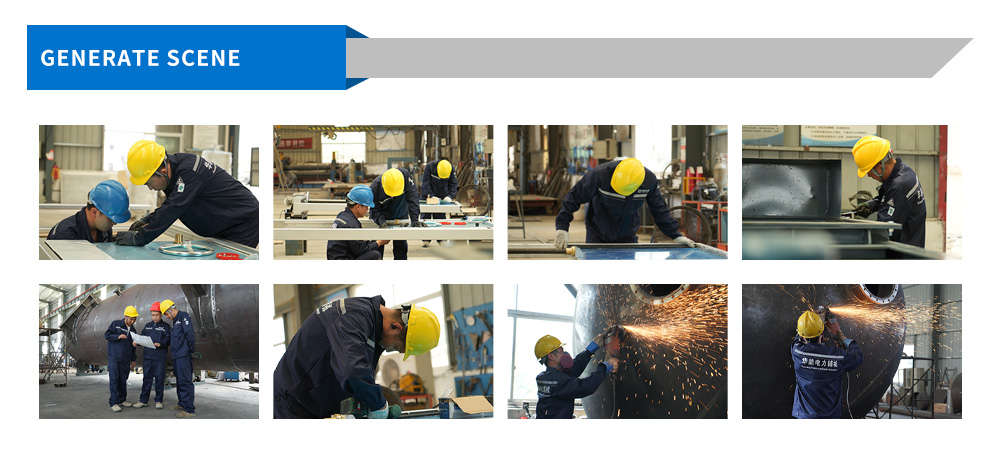
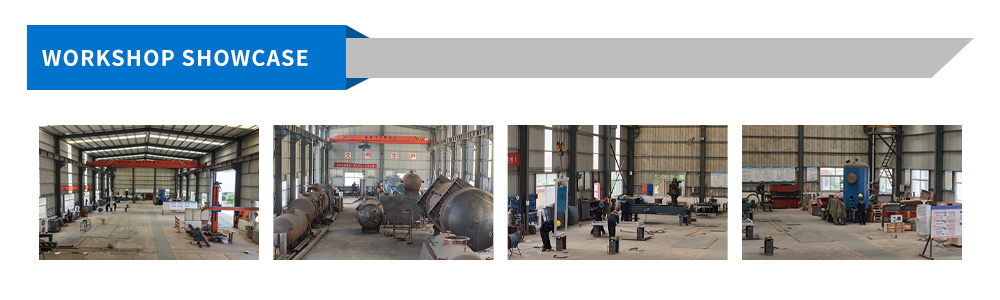
Quality documentation included
- Dimensional inspection report (CMM / profile projector) for critical features
- Material certificate with heat number traceability
- Surface finish and hardness records where specified
- Photographic packing record before shipment
Related sourcing pages
FAQ
Common questions
What products does Lianyungang Huaneng Power Auxiliary Equipment manufacture?
We manufacture power plant dampers (flue gas, desulfurization, high-temperature baffle doors), slide gate valves, blind flange valves, rotary film and sponge iron deaerators, venting silencers, automatic dosing devices, steam-water sampling devices and sampling coolers, coal powder samplers, condensate recovery units, coarse and fine powder separators, and plate / shell-and-tube heat exchangers.
Which certifications does your factory hold?
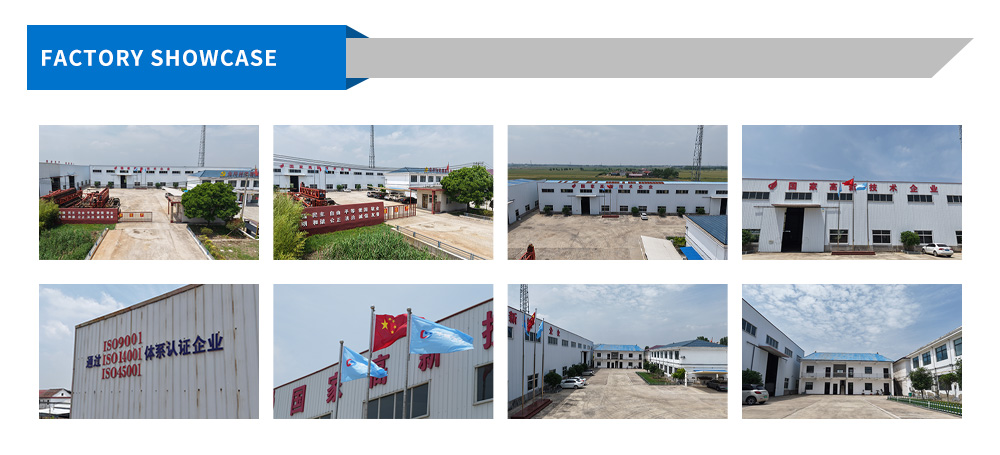
We are certified to ISO 9001:2015 (quality), ISO 14001:2015 (environmental) and ISO 45001:2018 (occupational health and safety) management systems. We are also a qualified supplier of Sinopec, PetroChina, China Guodian Corporation, China Datang Corporation, CNOOC and Aluminum Corporation of China Limited.
Can you match a damper or valve to our existing ductwork?
Yes — most of our business is retrofit supply. Send us the duct cross-section, design temperature and media, or drawings, templates and photos of the existing installation. Our engineers will dimension the unit, its flange drilling and the actuator interface to bolt directly into your plant.
What leakage performance do your dampers achieve?
Louver-type double-layer dampers with sealing air achieve a leakage rate below 0.5%; fully sealed slide gates and coal mill isolation doors achieve zero internal and external leakage. Every damper is leakage-tested in the works before shipment and a factory acceptance test report is supplied.