
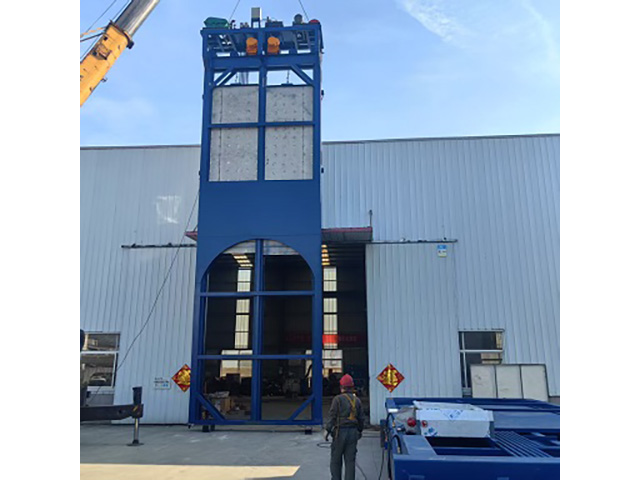
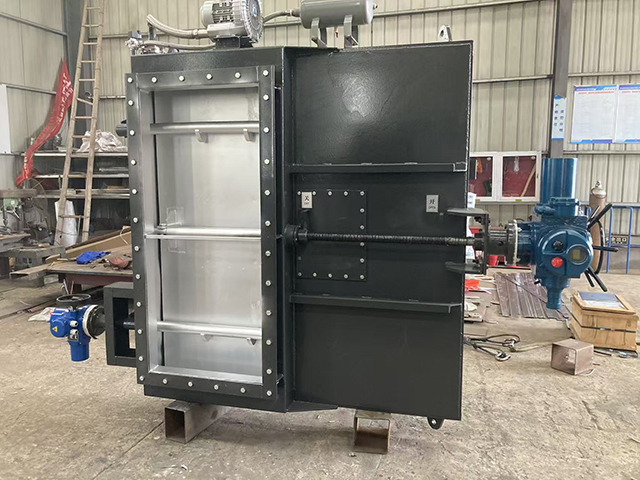
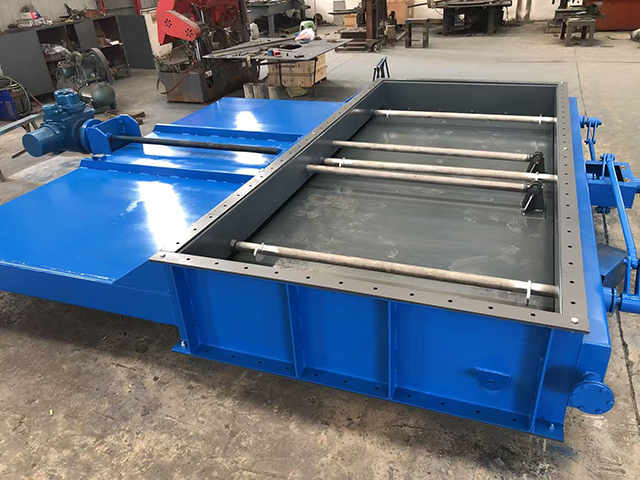
Power-Failure Quick-Opening Flue Gas Damper Valve
The implementation of a coke oven flue gas desulfurization project requires extracting flue gas from the…
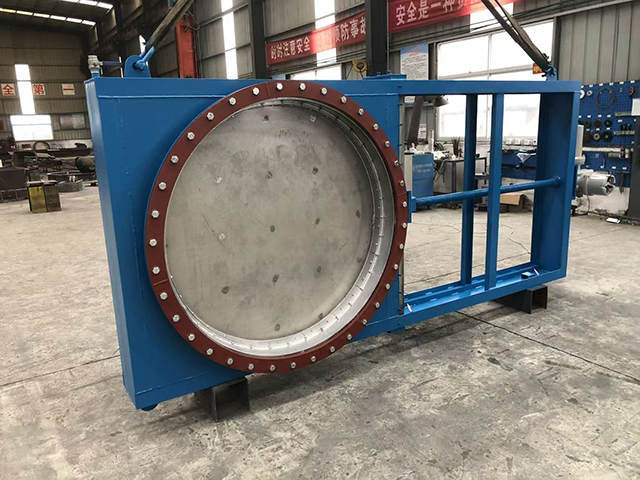
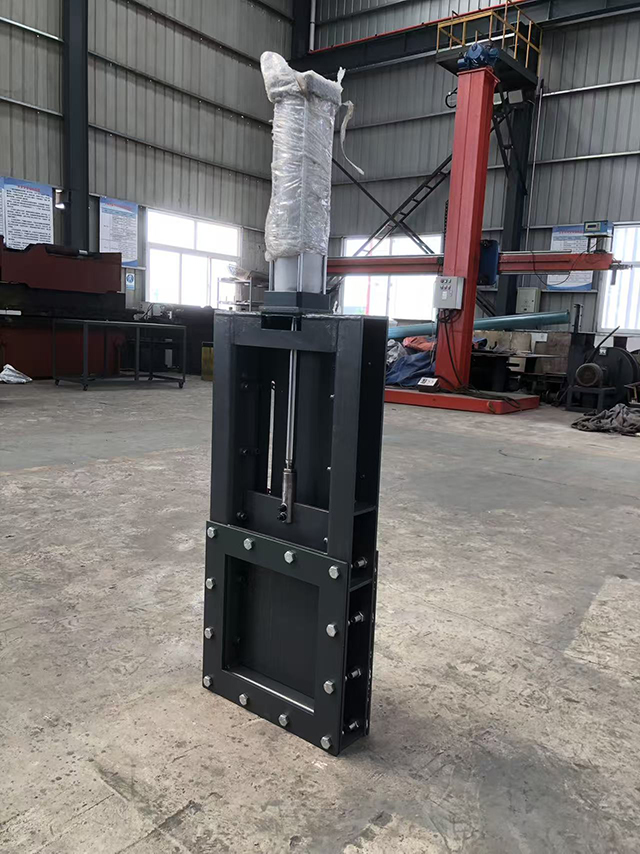
A slide gate is an industrial flow control device designed to open, close, isolate, or sometimes regulate the movement of bulk materials through a process system.
A slide gate is an industrial flow control device designed to open, close, isolate, or sometimes regulate the movement of bulk materials through a process system. It uses a flat sliding plate, commonly called a gate or blade, that moves across an opening. When the gate is retracted, the material passage is open. When the gate moves across the opening, the flow path is blocked.
Slide gates are widely used in bulk material handling systems, silos, hoppers, bins, chutes, conveyors, feeders, dust collection systems, ash handling systems, cement plants, mining plants, chemical processing facilities, grain handling systems, and power plants.
Unlike many conventional valves designed primarily for liquids or gases, a bulk material slide gate is commonly designed for powders, granules, pellets, ash, coal, cement, minerals, grains, and other dry solid materials. The basic operating principle is simple, but the engineering requirements can vary considerably according to material characteristics, temperature, pressure, opening size, operating frequency, sealing requirements, and installation conditions.
A properly selected industrial slide gate can provide reliable material isolation, simplified equipment maintenance, improved process safety, and convenient control of material discharge. For this reason, slide gates remain an important component in modern material handling and process equipment.

A slide gate is a mechanical gate used to control the passage of material through a rectangular, square, or round opening. The main gate plate travels linearly through a supporting frame or housing.
In a typical gravity-flow application, a slide gate is installed below a silo, hopper, storage bin, or chute. When the gate is open, bulk material moves through the outlet under gravity. When the gate is closed, the plate blocks the outlet and isolates the downstream equipment.
Common names include:
Slide gate
Slide gate valve
Sliding gate
Sliding gate valve
Bulk material slide gate
Industrial slide gate
Hopper slide gate
Silo slide gate
Manual slide gate
Pneumatic slide gate
Electric slide gate
Heavy duty slide gate
The exact terminology can vary by industry and equipment design. In bulk solids handling, the term slide gate often refers specifically to a gate installed in a material flow path rather than a conventional pipeline gate valve.
For bulk solids applications, the basic design normally includes a sliding blade, frame or housing, guides, seals or packing where required, and an actuator. Depending on the application, the actuator may be manual, pneumatic, hydraulic, or electric.
The working principle of a slide gate is straightforward.
In the open position, the sliding plate is pulled away from the material opening. The internal passage becomes available, allowing material to flow through the gate.
During closing, the gate plate moves horizontally or linearly across the opening. The plate gradually reduces the available flow area until the material passage is isolated.
When completely closed, the solid portion of the plate covers the opening. Depending on the design, the gate may provide basic material isolation, dust containment, or pressure-resistant shut-off.
The actuator determines how the gate moves. A manual handwheel may be sufficient for occasional operation, while pneumatic cylinders or electric actuators are commonly considered when remote operation or automation is required.
One important engineering point is that a slide gate is not automatically a precision metering device. Many slide gates are primarily intended for on/off isolation or coarse flow control. If a process requires highly accurate continuous feeding, a dedicated feeder or metering device may be more appropriate.
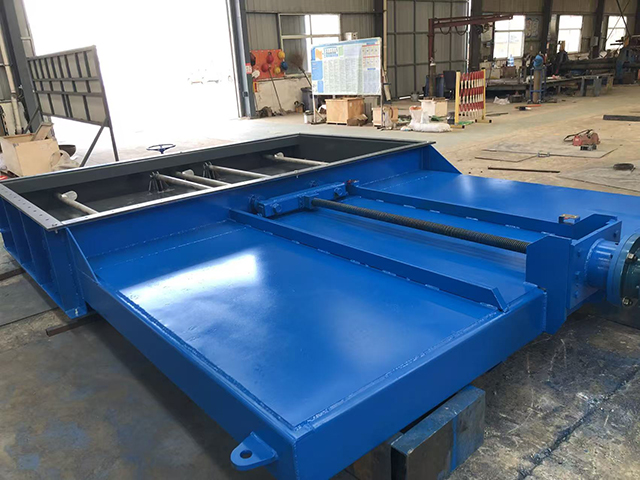
The exact construction varies by application, but a typical industrial slide gate may include the following components.
| Component | Main Function |
|---|---|
| Gate Plate | Opens or closes the material passage |
| Gate Frame | Supports the sliding mechanism |
| Housing | Protects internal components and guides material flow |
| Guide Rails | Maintain accurate gate movement |
| Sealing System | Helps reduce material or dust leakage |
| Actuator | Provides the force required to move the gate |
| Handwheel | Manual operation for simple applications |
| Pneumatic Cylinder | Fast automated gate movement |
| Electric Actuator | Remote and automated operation |
| Hydraulic Cylinder | High-force gate operation |
| Limit Switch | Detects open or closed position |
| Wear Liner | Protects components from abrasive material |
| Mounting Flange | Connects the gate to surrounding equipment |
The selection of each component should consider the operating environment, material properties, temperature, pressure, cycle frequency, and maintenance requirements.
Types of Slide Gates
Slide gates can be classified according to construction, shape, actuation method, sealing method, and application.
A manual slide gate uses a handwheel, lever, chain wheel, or similar mechanical mechanism.
It is suitable for applications where the gate is opened or closed occasionally and does not require remote control.
Typical applications include:
Small storage bins
Simple hoppers
Maintenance isolation
Low-frequency discharge points
Small material handling systems
Manual slide gates are generally simple to install and operate, with relatively low initial system complexity.
A pneumatic slide gate uses compressed air to drive the gate plate.
Pneumatic actuation is useful when fast operation, automatic control, and frequent cycling are required. The actuator can be connected to a control system, solenoid valve, position sensor, and other automation components.
Typical applications include:
Automated bulk handling
Cement processing
Powder conveying
Silo discharge
Automated production lines
Pneumatic conveying systems
Pneumatic slide gates can provide rapid operation, but the plant must have a suitable compressed-air supply and appropriate control components.
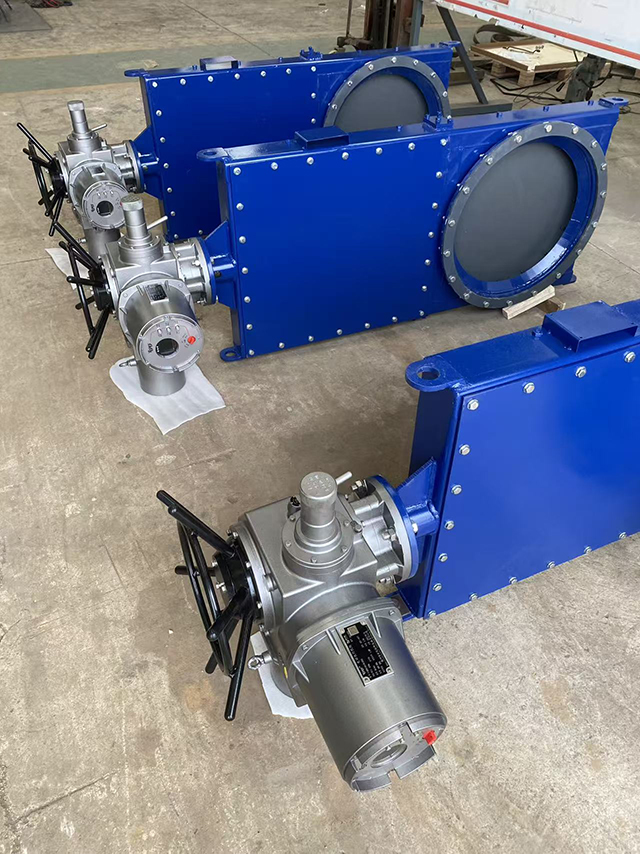
An electric slide gate uses an electric actuator or motor-driven mechanism to move the gate.
Electric slide gates are suitable for facilities where remote control, position monitoring, and integration with PLC or DCS systems are important.
Typical features may include:
Remote operation
Open/close position feedback
Adjustable operating speed
PLC integration
Automatic sequencing
Interlock control
Electric actuation is especially useful for large industrial systems where manual access to the gate is inconvenient or unsafe.
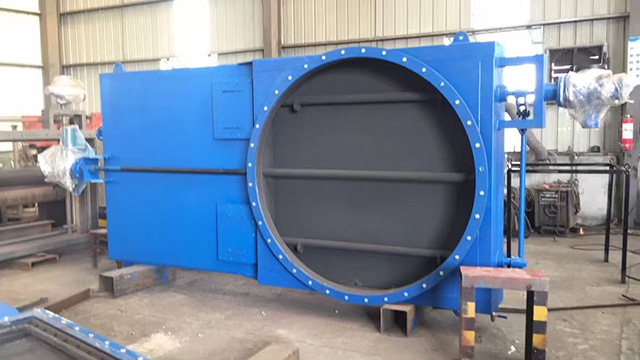
Hydraulic actuation can provide high operating force and is therefore suitable for large or heavily loaded gates.
Hydraulic slide gates may be considered for applications involving:
Large gate dimensions
High material loading
Heavy-duty industrial equipment
High operating forces
Difficult opening conditions
The hydraulic system must be properly designed to prevent leakage and ensure stable actuator operation.
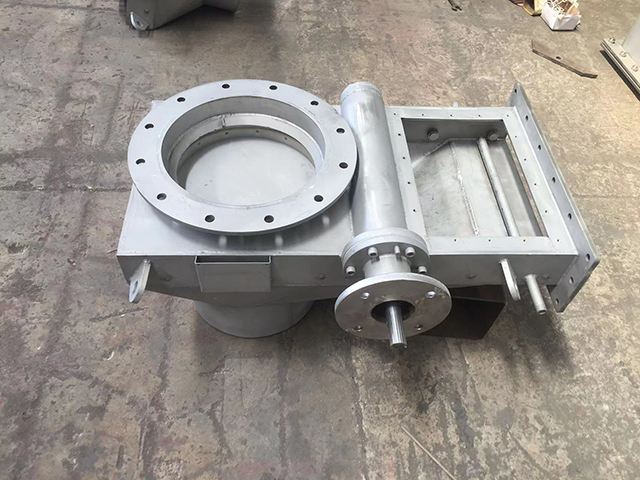
A round slide gate has a circular flow opening and is commonly installed below round outlets, pipes, silos, or conveying equipment.
Round designs can simplify connection to circular material handling systems and are available in different nominal diameters.
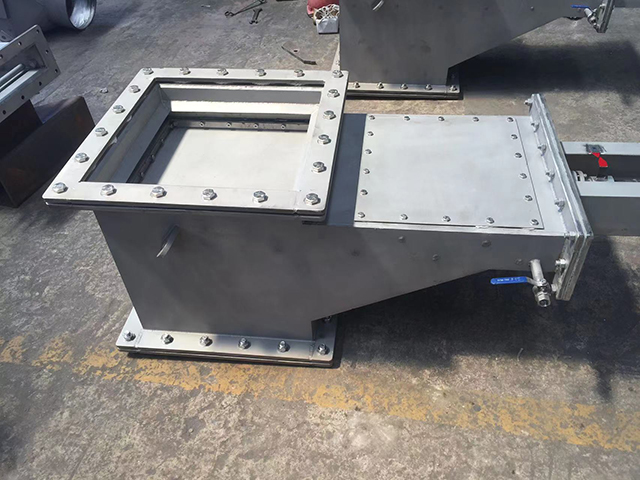
Square and rectangular slide gates are commonly used under hoppers, bins, chutes, feeders, and equipment with rectangular outlets.
The opening dimensions should be matched carefully to the upstream and downstream equipment to avoid unnecessary flow restrictions.
Slide Gate Materials
Material selection has a direct effect on service life, corrosion resistance, temperature capability, and maintenance requirements.
Common construction materials include:
| Material | Typical Advantage |
|---|---|
| Carbon Steel | Economical and suitable for general industrial service |
| Stainless Steel | Improved corrosion resistance |
| 304 Stainless Steel | General corrosion-resistant applications |
| 316 Stainless Steel | Better resistance to many corrosive environments |
| Abrasion-Resistant Steel | Suitable for abrasive materials |
| Hardened Steel | Improved wear resistance |
| Aluminum | Lightweight applications |
| Special Alloys | Severe temperature or corrosion conditions |
The gate plate may require a different material from the housing. For abrasive materials such as minerals, cement, clinker, or ash, wear-resistant plates, hard-facing, or replaceable liners may be considered.
In corrosive environments, stainless steel or specialized alloys may be selected. In high-temperature applications, the design must also account for thermal expansion and seal limitations.
Industrial slide gate designs can use carbon steel, stainless steel, abrasion-resistant materials, and specialized alloys depending on the application.
Slide Gate Applications
Slide gates are used across a wide range of industries.
Cement plants handle large quantities of powders and abrasive materials. Slide gates can be installed below:
Cement silos
Clinker storage systems
Fly ash systems
Limestone hoppers
Powder feeders
Transfer chutes
Abrasion resistance and reliable sealing are important because cement and mineral powders can cause significant wear.
Power plants use slide gates in several bulk material handling systems.
Typical applications include:
Coal handling
Fly ash handling
Bottom ash systems
Pulverized fuel systems
Silo discharge
Dust collection systems
Powder storage systems
High-temperature and abrasive conditions may require specialized construction materials, wear protection, and temperature-resistant components.
Mining operations handle highly abrasive materials such as:
Ore
Sand
Gravel
Mineral concentrates
Tailings
Limestone
Aggregates
Heavy-duty slide gates can provide isolation at hoppers, bins, chutes, and material transfer points.
Chemical plants may use slide gates for powders, granules, pellets, and other dry materials.
Important design factors can include:
Chemical compatibility
Dust containment
Temperature
Explosion protection requirements
Corrosion resistance
Cleanability
Slide gates are widely used in grain and agricultural material handling.
Typical materials include:
Wheat
Corn
Rice
Flour
Sugar
Seeds
Feed pellets
Starch
Food-processing applications may require hygienic construction, corrosion-resistant materials, smooth surfaces, and easy cleaning.
Plastic pellets and granules can be handled through slide gates installed beneath:
Storage hoppers
Pellet silos
Blending systems
Feed systems
Transfer equipment
The gate opening should be selected according to pellet size, flow characteristics, and required discharge capacity.
Advantages of Slide Gates
The basic sliding plate design is mechanically straightforward. Fewer moving components can simplify maintenance compared with more complicated flow-control mechanisms.
A properly designed slide gate can effectively isolate a hopper, silo, or downstream piece of equipment.
Slide gates are particularly useful for powders, granules, pellets, ash, cement, minerals, and similar materials.
Manual, pneumatic, electric, and hydraulic operating systems allow the same basic gate concept to be adapted to different automation requirements.
Industrial slide gates can be integrated with:
PLC systems
DCS systems
Limit switches
Position sensors
Solenoid valves
Safety interlocks
Remote control systems
The linear movement of the gate allows it to fit into many material handling layouts without requiring a large rotational envelope.
For abrasive or high-temperature applications, specialized slide gate designs can use wear-resistant materials, protective liners, and high-temperature components.
Some industrial designs incorporate removable wear components, replaceable seals, or accessible actuator assemblies to simplify maintenance.
Slide Gate Selection Guide
Selecting the correct slide gate requires more than simply matching the opening diameter.
Important selection parameters include:
Identify whether the material is:
Powder
Granule
Pellet
Aggregate
Ash
Coal
Cement
Mineral
Chemical powder
Food material
Material abrasiveness, particle size, moisture content, density, and flowability can significantly affect the gate design.
The gate opening should match the required material flow area and the connected equipment.
Common opening configurations include:
Round
Square
Rectangular
Temperature affects:
Gate plate material
Seal selection
Housing design
Thermal expansion
Actuator components
Lubrication requirements
High-temperature applications may require specialized slide gate construction. Some industrial high-temperature slide gate designs are engineered for material temperatures substantially above the range of standard bulk material gates.
Pressure must be clearly defined before selecting a gate.
A gravity-flow slide gate, a vacuum application, and a pressurized pneumatic conveying gate can require very different designs.
Application pressure is therefore one of the key factors in slide gate selection.
For abrasive materials, the designer should consider:
Gate plate thickness
Wear-resistant steel
Replaceable liners
Hardened surfaces
Protective coatings
Replaceable sealing components
A gate used once per week has different requirements from one operating hundreds or thousands of cycles per day.
High-cycle applications require careful consideration of actuator life, guide wear, sealing performance, and gate alignment.
The actuator should be selected according to:
Gate size
Material load
Required closing force
Operating speed
Cycle frequency
Available utilities
Automation requirements
Typical Slide Gate Specification Table
The following table provides a general reference framework. Actual specifications must be determined according to the application and engineering design.
| Parameter | Typical Specification Consideration |
|---|---|
| Product Type | Slide Gate / Slide Gate Valve |
| Application | Bulk Material Flow Control |
| Medium | Powder, Granule, Pellet, Ash, Cement, Coal, Minerals |
| Gate Shape | Round, Square, Rectangular |
| Nominal Size | Application dependent |
| Body Material | Carbon Steel, Stainless Steel, Special Alloy |
| Gate Material | Carbon Steel, Stainless Steel, Wear-Resistant Steel |
| Actuation | Manual, Pneumatic, Electric, Hydraulic |
| Installation | Hopper, Silo, Bin, Chute, Conveyor |
| Flow Direction | Usually Gravity Flow or Process Flow |
| Sealing | Metal, Elastomer, Packing, Application-Specific |
| Temperature | Application dependent |
| Pressure | Application dependent |
| Surface Treatment | Painting, Coating, Hard-Facing, Galvanizing |
| Control | Local or Remote |
| Position Feedback | Optional |
| Maintenance | Inspection and replacement of wear/sealing components |
| Design | Standard or Customized |
Industrial slide gate specifications can vary widely. For example, commercial designs range from relatively low-pressure bulk-solid gates to pressure-rated sliding gate valves, while specialized high-temperature designs can be engineered for extreme material temperatures.
Slide Gate vs. Knife Gate Valve
The terms slide gate and knife gate valve are sometimes used interchangeably, but the equipment can have different engineering purposes.
A slide gate in bulk material handling is commonly designed around gravity discharge and dry solids. A knife gate valve is frequently associated with process isolation for liquids, slurries, or media containing suspended solids.
| Feature | Slide Gate | Knife Gate Valve |
|---|---|---|
| Common Medium | Dry bulk solids | Liquids, slurries, solids-containing fluids |
| Typical Installation | Silo, hopper, bin, chute | Pipeline |
| Main Movement | Sliding plate | Knife-shaped gate |
| Common Function | Material isolation | Process isolation |
| Typical Material | Powder, grain, pellet, ash | Slurry, wastewater, pulp, process fluids |
| Installation Style | Often below storage equipment | Usually between pipe flanges |
| Flow Pattern | Often gravity flow | Usually pipeline flow |
However, terminology varies between manufacturers and industries. Selection should therefore be based on actual operating conditions rather than product names alone.
Slide Gate and Bulk Material Flow
Bulk solids do not behave exactly like liquids. Their flow characteristics can change with particle size, moisture, cohesion, density, and pressure.
A poorly selected slide gate may contribute to:
Material bridging
Ratholing
Irregular discharge
Gate blockage
Excessive actuator load
Premature wear
Material leakage
Dust release
For cohesive materials, the hopper and outlet design are particularly important. The slide gate should not be considered as an isolated component because upstream hopper geometry, material properties, and downstream equipment can influence actual flow behavior.
Proper material-flow analysis is therefore an important part of slide gate selection.
Slide Gate for Abrasive Materials
Abrasive bulk materials can rapidly wear standard components.
Typical abrasive materials include:
Cement
Clinker
Fly ash
Coal
Sand
Limestone
Ore
Mineral powder
Glass particles
Aggregates
For these applications, the slide gate may require:
Abrasion-resistant gate plates
Hardened surfaces
Replaceable wear liners
Reinforced frames
Heavy-duty guides
Protected sealing surfaces
The goal is to maintain gate movement and sealing performance over the expected operating cycle.
Slide Gate for High-Temperature Applications
High-temperature slide gates require special consideration because heat can affect both mechanical dimensions and sealing components.
Important factors include:
Thermal expansion
Gate plate deformation
Housing expansion
Seal temperature resistance
Actuator protection
Lubricant temperature limits
Material oxidation
Maintenance accessibility
Specialized industrial designs can use stainless steel, high-nickel alloys, floating seats, and other solutions for extreme temperature service. Some high-temperature slide gate designs are specifically developed for furnaces, boilers, roasters, and smelting processes.
Slide Gate Sealing Systems
Sealing is important when the process requires dust containment or pressure isolation.
Possible sealing approaches include:
Metal-to-metal contact can be suitable for high-temperature or abrasive environments where elastomer seals may not withstand the operating conditions.
Elastomer seals such as NBR, EPDM, or FKM can be selected according to temperature and chemical compatibility. The appropriate seal material depends on the process medium and operating environment.
Packing systems can help control leakage around moving components such as stems or shafts in certain slide gate configurations.
The sealing method should always be selected according to actual temperature, pressure, material characteristics, leakage requirements, and maintenance conditions.
Slide Gate Maintenance
Regular inspection can improve operating reliability and reduce unexpected downtime.
A typical maintenance program may include:
Inspecting the gate plate
Checking guide rails
Inspecting seals
Checking actuator mounting
Checking bolts and fasteners
Removing accumulated material
Inspecting wear liners
Checking limit switches
Testing open/close operation
Checking abnormal vibration or noise
Inspecting pneumatic or hydraulic connections
Lubricating components where required
A maintenance schedule should be based on operating frequency and material conditions.
A gate handling highly abrasive material at a high cycle frequency may require more frequent inspection than a manually operated gate used occasionally.
Common Slide Gate Problems
Possible causes include:
Material trapped inside the guides
Misalignment
Excessive material pressure
Bent gate plate
Damaged actuator
Worn guide components
Possible causes include:
Worn sealing components
Incorrect seal selection
Damaged gate plate
Poor alignment
Excessive wear
Possible causes include:
Insufficient pneumatic pressure
Actuator problems
Material accumulation
Mechanical friction
Damaged guide rails
Possible causes include:
Highly abrasive material
Incorrect material selection
Excessive operating cycles
High material velocity
Poor wear protection
Possible causes include:
Damaged seals
Improper sealing pressure
Worn components
Incorrect installation
Excessive internal pressure
Correct troubleshooting should begin with the actual operating conditions rather than replacing components without identifying the root cause.
Installation Considerations
Correct installation is essential for reliable slide gate operation.
Before installation, verify:
Gate dimensions
Flange dimensions
Bolt-hole pattern
Flow direction
Available installation space
Actuator clearance
Material flow direction
Maintenance access
Structural support
The connected equipment should be properly aligned. Excessive external loading on the gate housing can lead to deformation and operating problems.
For large slide gates, adequate structural support may be required to prevent the gate from carrying unintended loads from the hopper, silo, chute, or conveyor.
Slide Gate Automation
Modern industrial facilities increasingly integrate slide gates into automated material handling systems.
An automated slide gate can be controlled through a PLC or DCS and may include:
Open limit switch
Closed limit switch
Position sensor
Pneumatic solenoid valve
Electric actuator
Remote control
Safety interlock
Emergency stop logic
Operating status feedback
For example, a control system can prevent a downstream conveyor from starting until the slide gate reaches the correct position.
Automation can improve operating consistency and reduce the need for operators to manually access difficult or hazardous locations.
How to Choose the Right Slide Gate
A practical selection process should consider the following sequence:
| Selection Factor | Key Question |
|---|---|
| Material | What material will pass through the gate? |
| Particle Size | What is the minimum and maximum particle size? |
| Flowability | Is the material free-flowing or cohesive? |
| Abrasion | Is the material highly abrasive? |
| Temperature | What are normal and maximum temperatures? |
| Pressure | Is the system atmospheric, vacuum, or pressurized? |
| Opening | What opening size is required? |
| Installation | Where will the gate be installed? |
| Frequency | How often will the gate operate? |
| Actuation | Manual, pneumatic, electric, or hydraulic? |
| Sealing | What level of leakage control is required? |
| Automation | Is remote monitoring required? |
| Maintenance | How easily can wear parts be inspected or replaced? |
Industrial valve selection guidance emphasizes that opening dimensions alone are not sufficient. Material characteristics, temperature, pressure, conveying method, installation environment, and intended function should also be considered.
Key Benefits of Industrial Slide Gate
For many bulk material handling systems, a well-designed slide gate provides a combination of:
Reliable material isolation
Simple mechanical operation
Flexible actuation
Easy automation
Compact installation
Good wear resistance when correctly specified
Reduced maintenance complexity
Convenient equipment isolation
Improved process control
Adaptability to different bulk materials
The most important advantage is not simply the physical gate itself, but the ability to select a design that matches the actual material and operating conditions.
Frequently Asked Questions About Slide Gates
A slide gate is mainly used to open, close, isolate, or provide coarse flow control for bulk materials. Common applications include silos, hoppers, bins, chutes, conveyors, ash handling systems, cement plants, mining equipment, and grain handling systems.
Slide gates can handle many dry bulk materials, including powders, granules, pellets, cement, coal, ash, grain, minerals, aggregates, and other process solids.
In many industrial applications, a slide gate is referred to as a slide gate valve or sliding gate valve. However, the exact terminology depends on the industry and application.
Yes, specialized high-temperature slide gates can be designed for elevated-temperature applications. Standard seals and materials may not be suitable for extreme temperatures, so material selection and thermal expansion must be considered.
Common actuation methods include manual handwheels, pneumatic cylinders, electric actuators, and hydraulic cylinders.
A conventional slide gate is generally better suited to isolation or coarse flow control than precise continuous metering. Dedicated feeders may be more appropriate when accurate material dosing is required.
Service life can be improved through correct sizing, suitable material selection, wear-resistant components, proper alignment, appropriate sealing, regular inspection, and maintenance.
Conclusion
A slide gate is a practical and versatile flow control component for industrial bulk material handling. Its sliding plate mechanism provides a simple method of opening and closing material passages in silos, hoppers, bins, chutes, conveyors, feeders, and process equipment.
The performance of an industrial slide gate depends on more than gate size. Material type, particle size, flowability, abrasiveness, temperature, pressure, operating frequency, sealing requirements, installation conditions, and actuator selection all influence the final design.
Manual slide gates can provide economical and straightforward isolation, while pneumatic and electric slide gates can support automated industrial processes. Heavy-duty, wear-resistant, and high-temperature configurations can be adapted for demanding applications such as cement processing, power generation, mining, mineral processing, and high-temperature industrial equipment.
For reliable operation, the correct slide gate should be selected according to the complete operating environment. A properly engineered gate can improve material flow control, simplify equipment isolation, support plant automation, reduce maintenance problems, and contribute to more reliable bulk material handling.
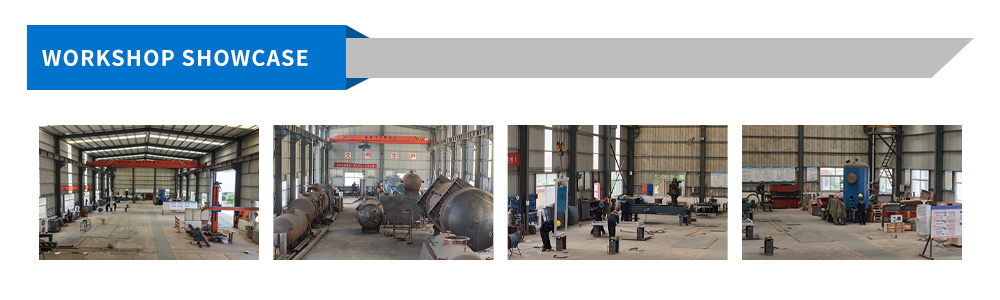
The implementation of a coke oven flue gas desulfurization project requires extracting flue gas from the…
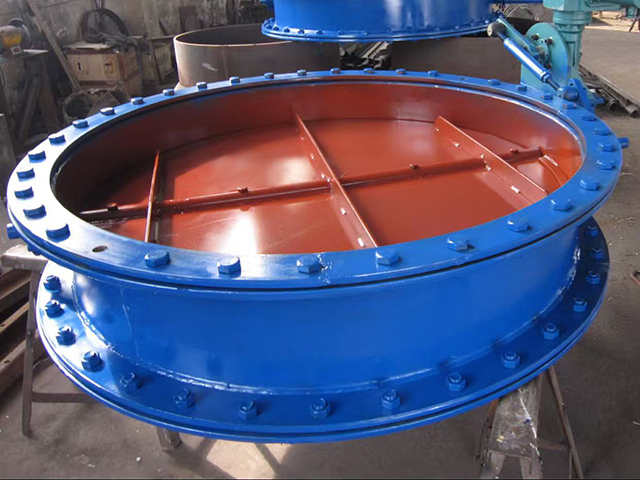
A high-temperature damper, also known as a Flue gas damper valve or high-temperature resistant damper, is a…
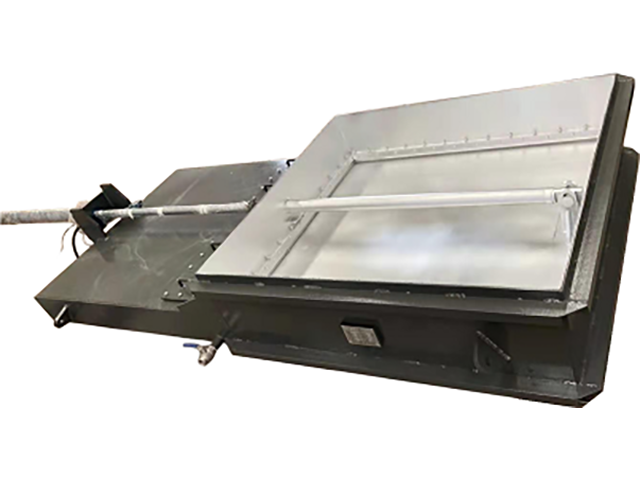
The Hydraulic slide gate valve, also known as a hydraulic slide valve, hydraulic gate valve…
FAQ
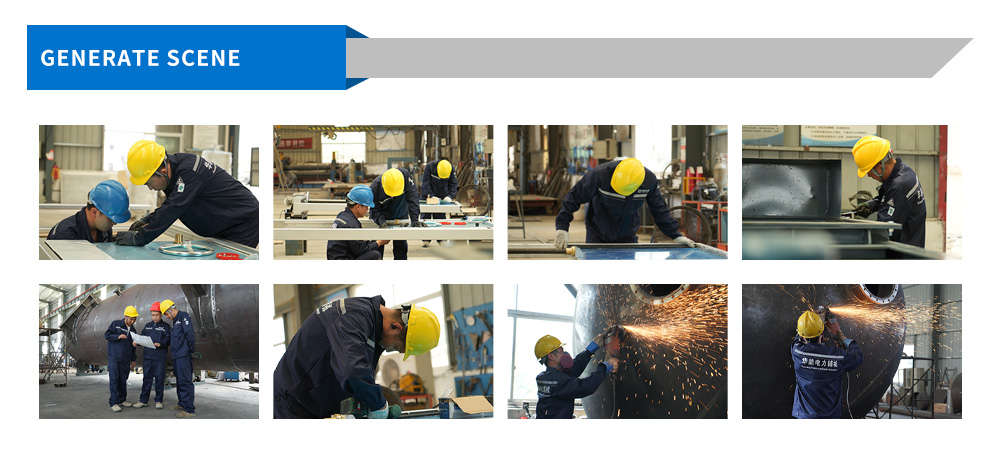
We manufacture power plant dampers (flue gas, desulfurization, high-temperature baffle doors), slide gate valves, blind flange valves, rotary film and sponge iron deaerators, venting silencers, automatic dosing devices, steam-water sampling devices and sampling coolers, coal powder samplers, condensate recovery units, coarse and fine powder separators, and plate / shell-and-tube heat exchangers.
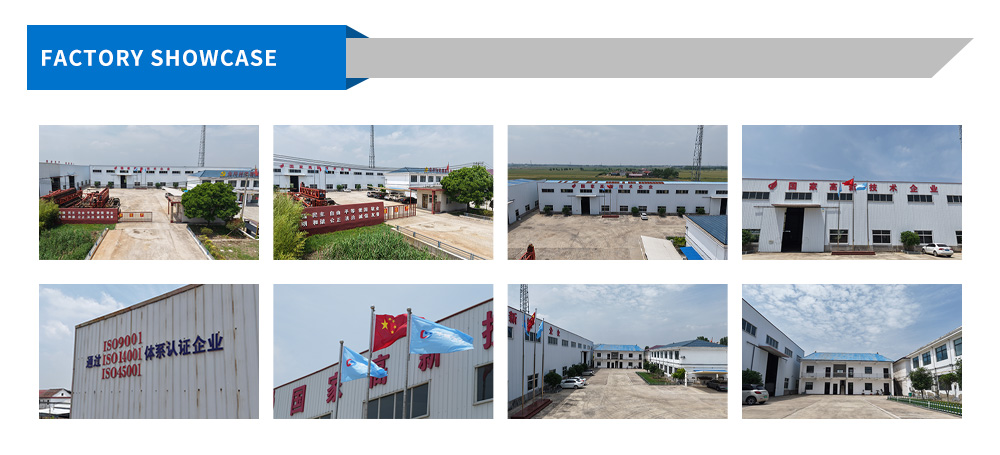
We are certified to ISO 9001:2015 (quality), ISO 14001:2015 (environmental) and ISO 45001:2018 (occupational health and safety) management systems. We are also a qualified supplier of Sinopec, PetroChina, China Guodian Corporation, China Datang Corporation, CNOOC and Aluminum Corporation of China Limited.
Yes — most of our business is retrofit supply. Send us the duct cross-section, design temperature and media, or drawings, templates and photos of the existing installation. Our engineers will dimension the unit, its flange drilling and the actuator interface to bolt directly into your plant.
Louver-type double-layer dampers with sealing air achieve a leakage rate below 0.5%; fully sealed slide gates and coal mill isolation doors achieve zero internal and external leakage. Every damper is leakage-tested in the works before shipment and a factory acceptance test report is supplied.
Send duct data or drawings today — get an engineering review, itemized quotation and realistic lead time within 12 working hours.